Writing 109ST: Writing for Science and Technology
Readings & Viewings Index
NOTE: Bring readings to class on the days scheduled for them (see course schedule). If you have an electronic reading device with wireless capabilities, you may use it in class. If not, please print hardcopies of the articles and them to class. All readings are password-protected to accord with copyright protections; see me for the course user name and password.
Weeks 1 and 2
READING NOTES: I have listed the UCSB Career Services Center's student career manual, which is an excellent, home-grown resource to assist you with your resume, cover letter, and future job interviews. To further assist you with preparation for job interviews, I recommend that you review the list of interview questions in advance.
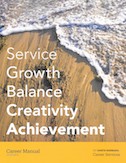
UCSB Career Manual 2018 / 2019. [The UCSB Career Manual 2018 / 2019 may be picked up at the UCSB Career Services office and is free to all UCSB students.]
Interview Questions — Use this helpful list of interview questions to prepare yourself for any interview. If you can respond with a good answer to each of the listed questions, you are truly ready!
The two books listed below offer a vast array of different types of resume layouts and styles; both are available at the UCSB Library reserve desk on two-hour loan. Even if you have a resume that already 'works,' it will help to consider other designs that might work even better.
*Be sure to jot down the call numbers before you request these at the reserve book desk; otherwise, staff may have difficulty finding them.
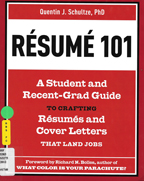
Quentin Schultze. Resume 101: A student and recent-grad guide to crafting resumes and cover letters. [HF5383. S3275. 2012]
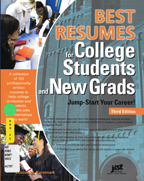
Louise Kursmark. Best Resumes for College Students and New Grads, 3rd Edition [HF5383. K867. 2012]
Musings on Science and Non-science
READING NOTES: As this is a course about writing for science and technology, the readings below begin with discussions about the role of science in human affairs, and the crisis in science illiteracy.
Joel Achenbach. "The Age of Disbelief," National Geographic. March 2015. pp. 30–47.
John Oliver. "Last Week Tonight with John Oliver: Scientific Studies (HBO)" May 8, 2016.
George Johnson. "The Widening World of Handpicked Truths," NY Times. (2015 AUG 25)
Week 3
READING NOTES: This week's readings including various STEM articles written for a variety of audiences: lay, professional, and expert/specialist. As you browse each article, notice how word choice, sentence length and sophistication alter, depending upon the audience each is intended for.
Science Journalism: Lay Audiences (misc. recent articles and viewings)
Los Angeles Times "Science" section. [NOTE: The LA Times has the most annoying paywall in journalism. You will be able to bypass this annoyance by utilizing the UCSB library's LA Times porthole.] *Browse topics.
"The Serious Need for Play." Melinda Wenner. Scientific American Mind (2009 Feb./Mar.)
Science Journalism: Professional Audiences (articles fr. Scientific American)
"Bound for the Moon." Michael Belfiore. Scientific American pp. 54–59 (2012 April)
"How Language Shapes Thought." Lera Boroditsky. Scientific American pp.63–65 (2011 Feb.)
"Is Time an Illusion?" Criag Callender. Scientific American pp. 58–65 (2012 June)
"The Inner Life of the Genome." Tom Misteli. Scientific American pp. 66–73 (2011 Feb.)
Science Journalism: Expert/Specialist Audiences
"U-Series Dating of Paleolithic Art in 11 Caves in Spain." A.W.G. Pike et al. Science. vol. 336 (2012 June 15)
Interview Questions
List of interview questions (Use this to prepare yourself for interviews.)
Week 4
READING NOTES: Because the quality of science writing can be no better than the science it is written about, all writers will do well to study how and why science sometimes goes awry. The articles below touch upon some common cognitive and methodological problems encountered within the scientific community. A brief excerpt from the book I co-authored with Christopher Dean, Terra Incognita: Researching the Weird (Kendall Hunt 2012), references some common logical fallacies; many of these find their ways into pseudoscientific reasoning.
Arguments from ignorance (burden-of-proof argumentation)
Neil DeGrasse Tyson, et al. "Neil Tyson talks about UFOs and the argument from ignorance," <https://www.youtube.com/watch?v=9BRDCxNEuyg> Interviewed 26 March 2009 at The Palladium in St. Petersberg, FL (9:37)Neil DeGrasse Tyson is well worth watching for at least two reasons: 1) Dr. Tyson is one of the highest-profile science communicators of this decade, host of the television series Cosmos: A Spacetime Odessy, and a polished lecturer whose playful, thought-provoking style reaches a broad scientific audience; 2) this clip from a lecture tour in 2009 is a witty and compelling discussion of a common logical fallacy that is often employed in pseudoscience: the argument from ignorance (also known as burden-of-proof argumentation).
Science and pseudoscience
Michael Shermer. "Why Smart People Believe Weird Things," Chapter 18 in Why People Believe Weird Things: pseudoscience, superstition, and other confusions of our times. 2002. New York: Henry Holt & Co.
This is a chapter from Michael Shermer's popular book, Why People Believe Weird Things.
Patrick Finn, Ann K. Bothe, Robin E. Bramlet. "Science and Pseudoscience in Communication Disorders: Criteria and Applications," American Journal of Speech-Language Pathology, Vol. 14, 172–186, August 2005.
Patrick Finn, Ann Bothe, and Robin Bramlet offer a rubric for testing whether medical treatment claims are truly scientific. Their article in the American Journal of Speech-Language Pathology focuses upon claims within the field of speech pathology; however, their delightfully well-organized and lucid "ten criteria" can be applied to virtually any scientific field of study.
Pathological science
Martin Fleischman and Stanley Pons. "Electrochemically induced nuclear fusion of deuterium," J. Electroanol. Chem., 261 (1989) 301-308
So-called cold fusion represents one of the best contemporary examples of pathological science. The originally published 1989 journal article here by Martin Fleischman and Stanly Pons kicked off a firestorm of research controversy that continues today.
Scientific fraud
A J Wakefield, S H Murch, A Anthony, J Linnell, D M Casson, M Malik, M Berelowitz, A P Dhillon, M A Thomson,
P Harvey, A Valentine, S E Davies, J A Walker-Smith. "Ileal-lymphoid-nodular hyperplasia, non-specific colitis, and
pervasive developmental disorder in children," The Lancet, Vol 351, 637–641 (February 28, 1998)
Andrew Wakefield et al.'s 1998 article in The Lancet represents the worst of fraudalent science. Despite the fact that Wakefield's co-authors and the editors of The Lancet retracted their support for the paper years ago, Wakefield himself has remained steadfast in his battle against vaccination. The overall result has been a rise in several deadly, previously suppressed diseases, particularly among young children.
Brian Deer. "How the case against the MMR vaccine was fixed," BMJ 2011; 342:c5347
Brian Deer. "How the vaccine crisis was meant to make money," BMJ 2011; 342:c5258
John Bohannon. "I Fooled Millions Into Thinking Chocolate Helps Weight Loss. Here's How," io9.com, (27 May 2015)
NOTE: A reprint of the original article cited in the Bohannon article above is available here.
Scientism
Austin L. Hughes. "The Folly of Scientism," The New Atlantis, Fall 2012, 32–50.
Philip Kitcher . "The Trouble with Scientism," The New Republic, May 24, 2012, 20–25.
Is science the best methodology to use for selecting your mate? Should "selection of the fittest" principles apply with regard to charity? These are the types of questions that spark debates between scientific 'purists' (whose scientifically argued positions are pejoratively termed "scientism") and philosophers. What follows are two articles that critique scientism and attempt to settle a longstanding idealogical turf war. The first, lengthy article by Austin L. Hughes was published in The New Atlantis in 2012 and continues to serve as a rallying point for critics of scientism. The second article by Phillip Kitcher, from The New Republic, also published in 2012, advocates reconciled, "healthy relationships between the sciences and the humanities" (25).
Scientific Publishing and Predatory Open-Access Publishers
"List of Standalone Journals," Scholarly Open Access: Critical analysis of scholarly open-access publications, Jeffrey Beall
NOTE: I have included the Beall lists here to support in-class discussions of how medical science has been impacted by the explosion in predatory open-access journals. For clarification, be certain to also see Beall's online essay, "Criteria for Determining Predatory Open-Access Publishers" (3rd Ed., 01 January 2015)
"Paper written as science hoax published by 157 science journals," UPI (03 Oct. 2013)
Science-Tech History: Pseudoscience/Junk Science
"A few Catholics still insist Galileo was wrong." Manya A. Brachear. Chicago Tribune (2011 Aug. 27)
Science-Tech History: Disputed and Challenged Research
"Something doesn't add up." Joan O'Connor Hamilton. Stanford pp. 50–55 (2012 May/June)
"The Danger of Cosmic Genius." Kenneth Brower. The Atlantic pp.48–62 (2012 Dec.)
"The verdict is in on climate change." Naomi Oreskes. latimes.com Op-Ed (2012 Jan. 22)
Logical Fallacies
Week 5
READING NOTES: The Robillard and Ulery piece below will help with completing Assignment #9. Genesis 6-8 and Michael Lewis give us a start with understanding the psychological impacts of numeracy. The other articles below are included to support our discussion of infographics and scientific storytelling.
Mike Parkinson, "Infographics Tips and Tools," Talent Development (2016)
"INFOGRAPHICS: ARMS AND HUMAN RIGHTS," Curated by Daniel Mack, Graphics by Cassiano Pinheiro (2015)
Scientific storytelling
Sustainable Science Communication Conference, UCSB, May 13–14, 2015
- Martha Russell, "Audience Co-creation of Sustainable Science Stories" Session III, 22:00–39:03
NOTE: Martha Russell is Executive Director of MediaX at Stanford University. In this presentation she outlines the crucial elements of effective scientific storytelling and demonstrates how and why "the story you tell may not be the story that is heard."
- Richard Hutton, "Is Content King...or Courtier? Making Science Assessible" Session I, 35:30–57:00.
NOTE: Richard Hutton is Executive Director of UCSB's Center of Environmental Communication and Education, and Adjunct Professor of Film and Media Studies. In this presentation he provides examples from his work as executive producer of the NOVA documentary series "Evolution" (2001). As he summarizes, the best science stories share "an arc, compelling characters, quest, challenge, drama, and a reasoanbly satisfying conclusion."
- Sonia Fernandez, "Science for the People: Making Scientific Research Assessible to the Layperson" Session II, 39:15–58:40.
NOTE: Sonia is a science journalist at UCSB.
- Julian Friedman, "The mystery of storytelling: Julian Friedmann at TEDxEaling," YouTube.com, 27 Nov. 2012
NOTE: Julian Friedmann is co-owner of the Blake Friedmann Literary Agency. In this presentation, he provides some frank and hard-hitting advice on what makes a story succeed. Although his examples are drawn from mainstream media, much of what he has to say is applicable to telling scientific stories.
Perhaps the best way to appreciate good storytelling in science is to read, watch and listen to it. We will discuss examples in class, including your favorites. Meanwhile, here are a few links to online sources of scientific storytelling:
Discover magazine
Smithsonian magazine